
Salvage Value Meaning, Formula How to Calculate?

The net capital spending of a company is the amount spent on purchasing fixed assets in a particular period. Depreciation measures an asset’s gradual loss of value over its useful life, measuring how much of the asset’s initial value has eroded over time. In the end, though, MACRS results in the same net depreciation as you would receive under the straight-line method. However, the taxpayer benefits from MACRS depreciation by having a lower net present value for their tax burden.
Depreciation Method
Each method uses a different calculation to assign a dollar value to an asset’s depreciation during an accounting year. Salvage value is a crucial component in effective asset management, facilitating informed decisions regarding asset utilization, disposal, and replacement. By leveraging salvage value estimates, businesses can strategically schedule asset retirements and replacements, ensuring alignment with productivity and financial objectives. As the book value decreases annually, the expense calculation changes, tapering as it approaches the salvage value. This method is ideal for assets that lose value quickly, offering tax benefits and more accurately reflecting the asset’s market value in its early years.
About After-Tax Salvage Value Calculator
- This guide provides a detailed explanation and practical examples to help you make informed decisions.
- By closely aligning costs with productivity, businesses can maintain financial precision and fairness in reporting.
- Liquidation value is the total worth of a company’s physical assets if it were to go out of business and the assets sold.
- The difference between the asset purchase price and the salvage (residual) value is the total depreciable amount.
- Salvage value, often referred to as residual value or scrap value, is the estimated amount an asset will be worth at the end of its useful life.
- Correct calculation of internet proceeds from asset disposal requires cautious consideration of varied elements.
- In the example, the machine costs $5,000, has a salvage value of $1,000, and a 5-year life.
You can still calculate depreciation without a salvage value; just put a $0 in any place where you need to enter a salvage value. With the straight line depreciation method, the value of an asset is reduced uniformly over each period until it reaches its salvage value. Straight line depreciation is the most commonly used and straightforward depreciation method for allocating the cost of a capital asset. It is calculated by simply dividing the cost of an asset, less its salvage value, by the useful life of the asset. AI also enhances depreciation forecasting by dynamically adjusting schedules based on real-time data, reducing human error and ensuring compliance with accounting standards.

Straight Line Depreciation
This means that the computer will be used by Company A for 4 years and then sold afterward. The company also estimates that they would be able to sell the computer at a salvage value of $200 at the end of 4 years. The Internal Revenue Service (IRS) requires companies to estimate a “reasonable” salvage value. As the salvage value is extremely minimal, the organizations may depreciate their assets to $0. The salvage amount or value holds an important place while calculating depreciation and can affect the total depreciable amount used by the company in Certified Public Accountant its depreciation schedule.
Double-Declining Balance
Accountants use the straight line depreciation method because it is the easiest to compute and can be applied to all long-term assets. However, the straight line method does not accurately reflect the difference in usage of an asset and may not be the most appropriate value calculation method for some depreciable assets. The company estimates that the asset’s salvage value will amount to $10,000 in the next five years once it plans to discard the asset. This means that the company will choose to depreciate approximately $90,000 of the said asset cost for five years, leaving the amount after tax salvage value of $10,000 of the cost remaining at the end of this period. XYZ company then expects to put the asset up for sale, thereby eliminating the asset from the company’s accounting records. The significance of internet proceeds within the context of after-tax salvage worth calculations stems from its direct impression on funding profitability evaluation.
In the example, the machine costs $5,000, has a salvage value of $1,000, and a 5-year life. With a 20% depreciation rate, the first-year expense is $800, and the second year is $640, and so on. To calculate the after-tax salvage value, subtract the book value from the selling price to find the gain, multiply the gain by the tax rate, and then subtract the tax from the selling price.
- It’s just an estimate since your business may be able to continue using an asset past its useful life without incident.
- Salvage value plays a crucial role in determining the worth of an asset at the end of its useful life.
- A company may elect to use one depreciation method over another in order to gain tax or cash flow advantages.
- The next sides discover the important hyperlink between correct monetary projections and the utilization of an after-tax salvage worth calculator.
- Salvage value is not taken into account for calculating depreciation for tax purposes.
- Tools often incorporate features like real-time data analytics, customizable reports, and scenario modeling.
- It is important to set an initial salvage value, which represents the estimated value of the asset at the end of its useful life.
For tax purposes, the depreciation is calculated in the US by assuming the scrap value as zero. Salvage value is also called scrap value and gives us the annual depreciation expense of a specific asset. It must be noted that the cost of the asset is recorded on Bookkeeping vs. Accounting the company’s balance sheet whereas the depreciation amount is recorded in the income statement. With the straight-line depreciation method, a property’s cost recovery is spread out evenly over its useful life. Each method needs a sufficient amount of consideration when dealing with salvage value. The total accumulated depreciation refers to the asset’s depreciable amount once all the depreciation expenses have been put down on the books.
Double Entry Bookkeeping

Defining salvage value means estimating the amount an asset will be worth at the end of its useful life, after accounting for depreciation. It reflects the expected disposal value after costs like removal or sale, crucial for calculating depreciation and financial planning. Such calculations aid in accurate financial projections and decision-making regarding asset disposition, helping businesses plan future expenditures more effectively. Additionally, using leasing calculation methods for machinery can provide insight into the potential benefits of leasing over purchasing. Salvage value is important in accounting as it displays the value of the asset on the organization’s books once it completely expenses the depreciation.
- These taxes, usually neglected, symbolize a vital element inside after-tax salvage worth calculations.
- The printing machine has a positive net present value (NPV) of $40,402 which makes it an acceptable investment.
- On the other hand, if a company is uncertain about a particular asset’s useful life and significance, then there will be an approximately lower number of years as estimated.
- According to IAS 16, the value of equipment or machinery after its useful life is often termed the scrap value.
- If a company is still determining how long something will be useful, they might guess a shorter time and say it’s worth more at the end (higher salvage value) to keep it on their books longer.
- Industry resources or professional appraisals can aid in determining an accurate estimate.
Depreciation and After-Tax Salvage Value Assumptions
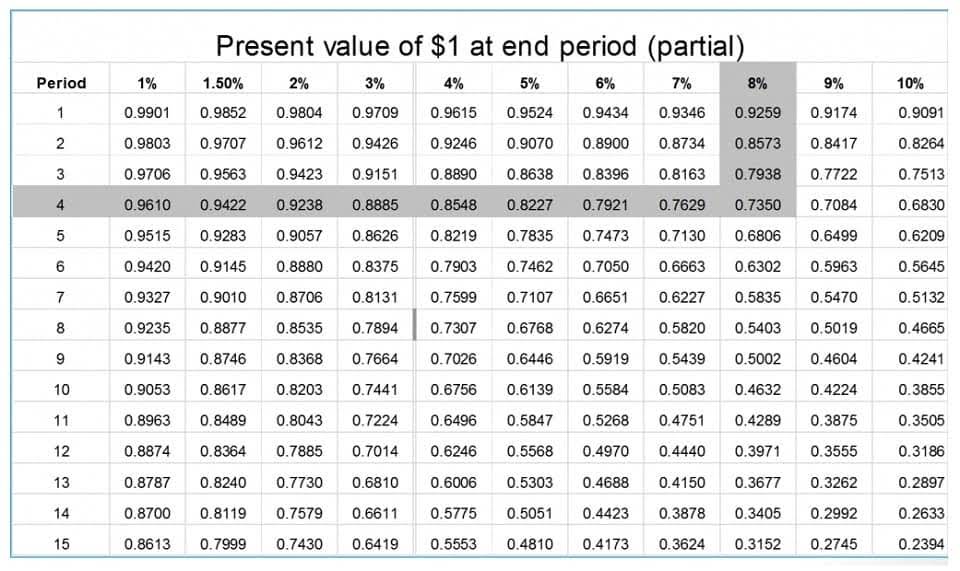
The units of production method ties depreciation to actual usage, making it particularly relevant for assets whose wear and tear depend more on usage than time. Instead of a fixed annual charge, depreciation varies with the asset’s operational output, like machine hours or units produced. Salvage value is not taken into account for calculating depreciation for tax purposes. The tax rate of Falcon is 30% and the company requires a 14% after-tax return on all investments. Net present value (NPV) is a technique used in capital budgeting to find out whether a project will add value or not. It involves finding future cash flows of an option and discounting them to find their present worth and comparing it to the initial outlay required.
What happens when there is a change in a depreciable asset’s salvage value?
The percentage of cost method multiplies the original cost by the salvage value percentage. The NPI, a unique 10-digit number assigned by CMS, standardizes provider identification for billing and administrative tasks. Chartered accountant Michael Brown is the founder and CEO of Double Entry Bookkeeping.
